An employment contract is not merely a routine document signed on an employee’s first day. It is the legal document that an employer or employee may rely on before the labor courts if the employment relationship breaks down. Following the entry into force of the 2025 Labor Law amendments and the Ministry’s increased electronic documentation requirements, drafting an employment contract Saudi Arabia has become a legal task that requires careful attention. In this guide, the team at Al-Shatiri & Al-Ghamdi Law Firm explains the main rules you need to know when preparing a legally sound employment contract.
Drafting a valid employment contract Saudi Arabia requires including the mandatory information set out in Article 51 of the Saudi Labor Law, specifying whether the contract is fixed-term or indefinite, and defining any probation period, which may extend to a maximum of 180 days following the 2025 amendments. The contract should also address salary, duties, confidentiality, penalty clauses, and termination. It must be prepared in two copies, one for each party, and employment contracts must be documented electronically through the Qiwa platform, with the Ministry targeting a 90% documentation compliance rate by June 30, 2026.
Concerned that your employment contract may contain a legal gap that could later lead to a labor dispute? The team at Al-Shatiri & Al-Ghamdi Law Firm can assist with drafting an employment contract that defines the rights of both parties, reflects the 2025 Labor Law amendments, and can be properly documented through the Qiwa platform.
Would you prefer to understand the details first? Continue reading this guide to review the relevant legal considerations and procedures before contacting us.
What Does Drafting an Employment Contract Mean Legally?
Drafting an employment contract is the legal process of converting the agreement between an employer and an employee into a clear and enforceable document that defines the rights and obligations of both parties in accordance with the Saudi Labor Law and reduces ambiguities that may later lead to disputes. A properly drafted contract serves three main purposes: clarifying obligations, supporting judicial enforceability, and reducing the risk of disputes before they arise.
Article 51 of the Labor Law provides that an employment contract must be prepared in two copies, with each party retaining one copy. The employment relationship may nevertheless be considered valid even if the contract is not written, and the employee may use available forms of evidence to establish their rights. However, the absence of a written contract may weaken the employer’s position, particularly in light of the increased mandatory documentation requirements through the Qiwa platform.
Types of Employment Contracts Under Saudi Law
The types is:
1. Fixed-Term Employment Contract
- The contract ends on a specified date or upon completion of a particular task.
- It expires automatically at the end of its term unless the parties agree to renew it.
- For a Saudi employee, renewal for three consecutive terms or continuation for four years converts the contract into an indefinite-term contract.
- Early termination by either party without lawful grounds may give rise to compensation under Article 77.
2. Indefinite-Term Employment Contract
- No specific expiry date is stated.
- This type is available to Saudi employees only.
- Written notice is required for termination: 30 days when termination is initiated by the employee and 60 days when initiated by the employer, following the 2025 amendments.
- Termination without a legitimate reason may result in compensation.
3. Special Types of Employment Contracts
- Part-time contract: involves working fewer hours than a full-time employee.
- Flexible work contract: compensation is calculated on an hourly basis for an agreed number of hours.
- Temporary employment contract: used for a specific task for a period not exceeding 90 days.
- Contract for a non-Saudi employee: must be written and fixed-term; otherwise, its term is deemed to be one year.
Mandatory Information in an Employment Contract Saudi Arabia Under Article 51
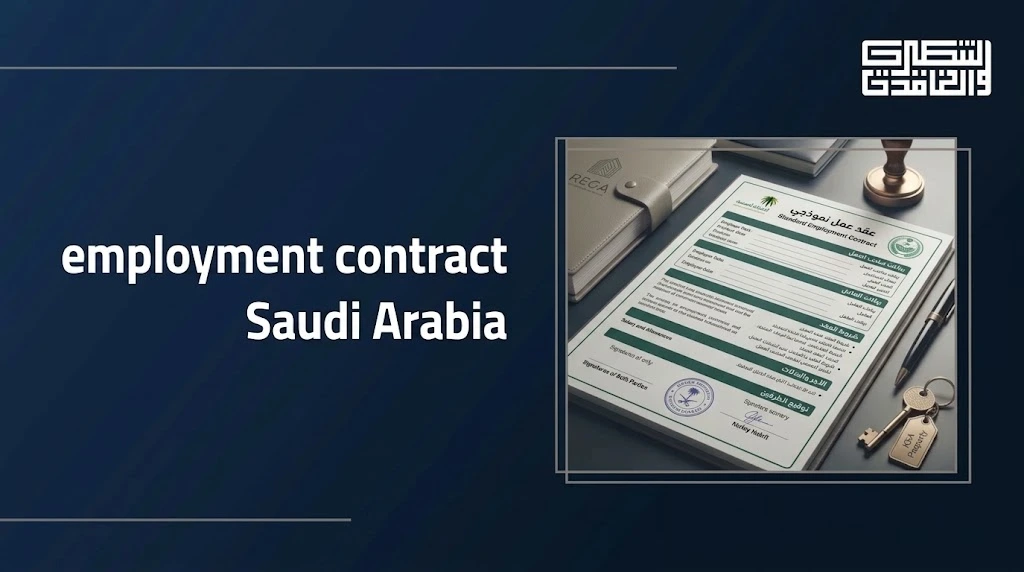
Article 51 and the Ministry’s standard employment contract form specify the information that should be included in every employment contract:
| Information | Details |
|---|---|
| Employer information | Name, commercial registration details, and address. |
| Employee information | Name, nationality, national ID or residency number, and address. |
| Nature of work | Job title and principal duties. |
| Place of work | City and branch. |
| Commencement date | The employee’s actual first day of work. |
| Contract term | Fixed-term or indefinite-term. |
| Salary | Basic salary, allowances, and payment dates. |
| Probation period | It must be expressly stated and its duration clearly specified. |
| Notice period | The applicable notice period for termination. |
| Signatures | Both parties sign each copy of the contract. |
Probation Period Following the 2025 Amendments
The probation period is one of the provisions significantly affected by the amendments. Under Article 53 following the amendment:
- The maximum total probation period is 180 days, instead of 90 days.
- The probation period must be expressly stated in the employment contract and its duration clearly specified.
- An employee may not generally be placed on probation more than once with the same employer, unless the parties agree in writing to another probation period for a different profession or type of work.
- During probation, either party may terminate the contract without notice or compensation unless otherwise agreed.
Essential Clauses That Protect Both Parties
The contract must include:
1. Salary and Benefits Clause
The contract should clearly distinguish between:
- Basic salary: used when calculating end-of-service benefits.
- Allowances such as housing, transportation, and communication allowances, which may be included in end-of-service calculations depending on their nature.
- Incentives and commissions: the contract should explain how they are calculated and when they are paid.
- Payment date: whether monthly or weekly.
- Payment method: bank transfer, as required under the Wage Protection System.
2. Duties and Authority Clause
A clear job description protects the employer from later claims that a particular task falls outside the employee’s responsibilities. It also protects the employee from being assigned duties that were never agreed upon. A detailed job description may therefore be attached to the employment contract as a separate schedule.
3. Confidentiality and Non-Compete Clauses
- Confidentiality: the contract should identify the information being protected and specify the duration of the obligation, which may continue after termination of employment.
- Non-compete: under Article 83 of the Labor Law, the restriction may not exceed two years and must be limited in terms of time, place, and type of work. The employer must also have a genuine interest that requires protection.
- Intellectual property: the contract should address ownership of works, inventions, and other intellectual outputs created by the employee during employment.
4. Penalty Clause
A penalty clause provides an agreed estimate of compensation payable when a specified obligation is breached. It should be:
- Proportionate to the obligation and the potential harm.
- Linked to a specific obligation, such as confidentiality or non-competition.
- Capable of being reduced by the court if the amount is considered excessive.
5. Contract Termination and Notice Periods
Following the 2025 amendments:
| Situation | Period |
|---|---|
| Termination of an indefinite-term contract by the employee | 30 days |
| Termination of an indefinite-term contract by the employer | 60 days |
| Written resignation | Deemed accepted if 30 days pass without a response |
| Probation period | No notice unless otherwise agreed |
End-of-service benefits should also be addressed in accordance with Article 84: half a month’s wage for each of the first five years of service and one full month’s wage for each subsequent year.
Documenting an Employment Contract Through Qiwa
Under the regulatory decisions issued by the Ministry of Human Resources and Social Development, establishments are required to document employment contracts electronically through the Qiwa platform. According to the Ministry’s announcement, the targeted compliance rate was increased to 90% by June 30, 2026.
Steps for Documenting the Contract Through Qiwa
- Log in to the Qiwa platform using the employer’s account.
- Select the establishment, then choose the “Contract Management and Documentation” service.
- Complete the establishment information.
- Enter the employee’s information, including ID number and nationality.
- Enter the employment contract details, including job title, salary, term, probation period, and notice period.
- Send the contract electronically to the employee for review.
- The employee accepts the contract electronically through their Qiwa account.
- The contract is approved and officially stored on the platform.
Common Mistakes When Drafting an Employment Contract Saudi Arabia
- Using one standard template for all employees without adapting it to the specific job position.
- Failing to distinguish between basic salary and allowances, which may create problems when calculating end-of-service benefits.
- Drafting an unrestricted non-compete clause without specifying time, place, and type of work, which may invalidate the clause.
- Omitting the probation period or drafting it ambiguously.
- Failing to regulate overtime and the method for calculating it.
- Leaving the termination mechanism unclear, which may result in the statutory rules applying instead of terms specifically agreed by the parties.
- Failing to provide for the return of company property, equipment, and files when employment ends.
- Relying only on a paper contract without documenting it through the Qiwa platform.
- Confusing the employment contract with the company’s work regulations and using both to regulate the same matters inconsistently.
When Do You Actually Need a Lawyer to Draft the Contract?
Legal assistance may be particularly useful in the following situations:
- Executive employment contracts, such as contracts for general managers, chief financial officers, and chief technology officers, because of the sensitivity of their terms.
- Non-compete and confidentiality clauses, where defective drafting may cause the clause to become unenforceable.
- Contracts involving foreign employees, because additional legal requirements may apply.
- Startup employment contracts that include shares, equity arrangements, or performance-based incentives.
- Penalty clauses that need to be drafted in a manner capable of being considered by the courts.
- Updating older employment contracts so that they reflect the 2025 amendments.
The team providing our labor legal consultation services can assist with the legal drafting and review of employment contracts and their documentation through Qiwa as a licensed law firm. visit our contact page for direct communication.
Frequently Asked Questions
Is an Oral Agreement Considered an Employment Contract?
Yes. Under Article 51 of the Labor Law, the employment relationship may be considered valid even if the contract is not written, and the employee may establish their rights through available forms of evidence. However, the absence of written documentation may weaken the employer’s position, and electronic documentation through Qiwa has become mandatory for establishments.
What Is the Maximum Probation Period After the 2025 Amendments?
The maximum total probation period is 180 days. It must be expressly included in the employment contract and its duration must be clearly specified.
What Is the Notice Period for Terminating an Indefinite-Term Contract?
The notice period is 30 days when the employee terminates the contract and 60 days when the employer terminates it, according to the 2025 amendments.
Can a Fixed-Term Contract Be Renewed Indefinitely?
For a Saudi employee, renewal of the contract for three consecutive terms or continuation for four years converts it into an indefinite-term contract. A non-Saudi employee’s contract remains fixed-term.
How Do I Document an Employment Contract Through Qiwa?
Through the Qiwa platform, select “Contract Management and Documentation,” enter the employee’s information and the contract details, and send the contract electronically to the employee. Once the employee accepts it through their Qiwa account, the contract is approved and officially stored on the platform.
When Is a Non-Compete Clause Invalid?
A non-compete clause may be invalid if it exceeds two years, fails to specify the applicable time, place, or type of activity, or if the employer does not have a genuine legitimate interest that requires protection.
Can a Court Modify a Penalty Clause?
Yes. The court may reduce the agreed amount if it considers it excessive or disproportionate to the actual harm suffered by the affected party.
Drafting a legally sound employment contract Saudi Arabia requires more than filling out a standard template. The contract should clearly define the employment relationship, the rights and obligations of both parties, the probation period, salary, notice requirements, confidentiality obligations, and termination rules. Following the 2025 Labor Law amendments and the increased use of electronic documentation through Qiwa, older employment contract templates should be reviewed to determine whether they remain consistent with the current requirements.
Sources:
- Saudi Labor Law – Bureau of Experts at the Council of Ministers
- Employment Contracts – Ministry of Human Resources and Social Development
- Probation Period – Ministry of Human Resources and Social Development
- 2025 Labor Law Amendments Guidance – Ministry of Human Resources and Social Development
- Contract Management – Ministry of Human Resources and Social Development
- Official Qiwa Platform