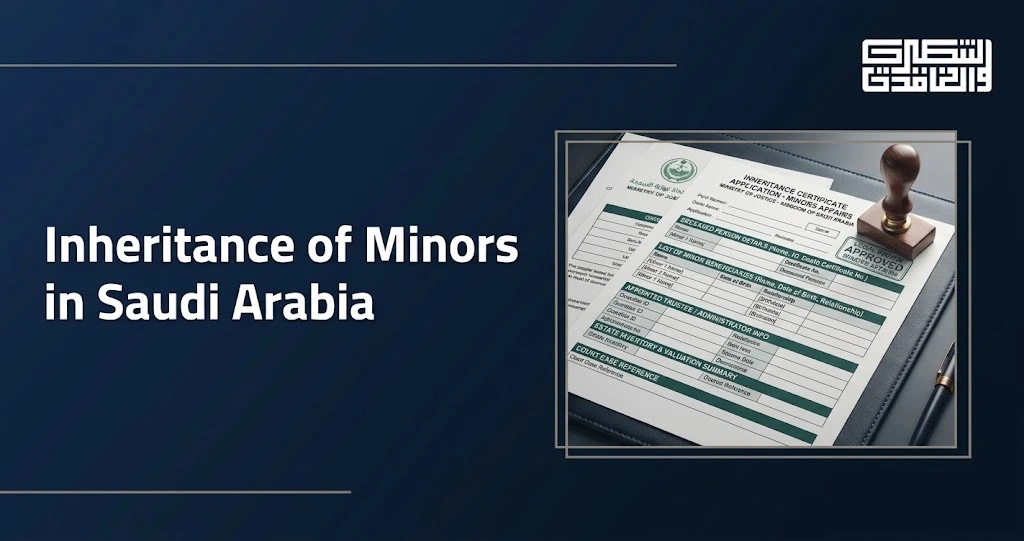
Inheritance of minors in Saudi Arabia raises an important question before any action is taken: who has the authority to manage a minor’s inheritance, and what are the limits of that authority? A minor inherits according to the applicable inheritance shares, but a guardian, testamentary guardian, or court-appointed curator manages the minor’s share. A guardian cannot sell, partition, or mortgage the minor’s real estate without authorization from the competent court. This guide explains who qualifies as a minor, who manages the minor’s assets, which transactions require court approval, and what happens when the minor reaches the age of majority.
Under Saudi law, a minor is a person who has not yet reached the age of 18. A minor inherits according to the applicable inheritance shares and is included in the heirship certificate. The minor’s assets are ordinarily managed under the guardianship of the father or paternal grandfather, or by a testamentary guardian or curator appointed by the competent court. A guardian or testamentary guardian may not buy or sell the minor’s real estate, partition or mortgage it, or undertake other specified transactions without court authorization. Court approval is also required to withdraw funds deposited by the court or borrow in the minor’s name. An application for financial guardianship can be submitted through Najiz. Financial guardianship over a minor by age ends when the minor reaches the age of majority, at which point the assets are handed over to the owner.
What Does Inheritance of Minors in Saudi Arabia Mean?
It refers to the share of an estate inherited by a person who has not reached the age of majority, together with the rules governing the management and protection of that share. A minor is included in the heirship certificate like any other heir and is entitled to the applicable inheritance share, but cannot independently manage or dispose of the inherited assets.
An heirship certificate can be obtained through the Ministry of Justice’s Estates Platform. According to the Ministry’s guidance, one of the heirs or an authorized representative may submit the application; a separate power of attorney from every other heir is not required.
Who Qualifies as a Minor Under Saudi Law?
A minor is a person who has not reached the age of majority. For the purposes of the Saudi Personal Status Law, the age of majority is 18 years. The decision approving the Personal Status Law, available through the Ministry of Justice Legal Portal, specifies that the age of majority is reached upon completing 18 years of age.
The Ministry of Justice has also explained that financial guardianship based on age applies until the individual reaches 18. Guardianship over an adult who lacks mental capacity is a separate matter and may apply only after that age, subject to the applicable legal requirements and a court decision.
Is a Minor Entitled to Their Full Inheritance Share?
Yes. A minor is entitled to the full inheritance share determined under the applicable inheritance rules, just like any other heir. The minor’s age does not extinguish or reduce that entitlement. What changes is who is legally authorized to represent the minor and manage the inherited assets.
A minor’s share must not be disregarded during the division of an estate. Nor should anyone relinquish that share on the minor’s behalf without the required authorization. As a practical matter, the share should be determined by reference to the heirship certificate and any duly authorized partition agreement.
Who Manages a Minor’s Inheritance: A Guardian, Testamentary Guardian, or Curator?
The minor’s assets are ordinarily managed by the guardian, generally the father and then the paternal grandfather, subject to the applicable legal rules. A testamentary guardian or a curator may also manage the assets when appointed in accordance with the law. The following table provides a simplified practical classification rather than reproducing statutory wording.
| Role | Who They Are | How the Role Is Established |
|---|---|---|
| Guardian | Ordinarily the father, followed by the paternal grandfather | The role generally arises from the legally recognized family relationship, although an official authority may require a guardianship deed |
| Testamentary Guardian | A person appointed by the father or by the competent court, as applicable | Established through the relevant guardianship or testamentary appointment document |
| Curator | A person appointed by the court to manage the minor’s assets | Established by a court judgment or order |
An application to establish financial guardianship over a minor by age or a person lacking mental capacity can be submitted through the Najiz portal, according to the Ministry of Justice’s guidance.
For further information about inheritance matters, see our inheritance and estate services.
Which Transactions Involving a Minor’s Assets Require Court Approval?
Certain significant transactions involving a minor’s assets require authorization from the competent court. These include transactions involving real estate and specified financial dealings.
According to the Ministry of Justice’s guidance, a guardian or testamentary guardian may not undertake the following transactions involving a minor’s assets without court authorization:
- Purchasing real estate for the minor, selling or partitioning the minor’s property, mortgaging it, or merging it with other property.
- Entering the minor as a party to a company whose articles of association are to be formally documented or whose capital is to be increased.
- Withdrawing the minor’s funds deposited by the court with an institution or bank, regardless of the reason for the deposit.
- Borrowing money in the minor’s name.
The precise application of these restrictions depends on the circumstances and the relevant provisions of the Personal Status Law. The father may be subject to specific rules for certain transactions, so the same requirements should not automatically be assumed to apply identically to every guardian.
Is there a minor among the heirs, and are you concerned that a sale or partition could be delayed or that the minor’s share could be harmed? The team at Al-Shatiri & Al-Ghamdi Law Firm can help you understand the available options, identify the appropriate procedure, and determine the documents required before proceeding.
Contact a Specialized Legal Partner
Would you prefer to understand the details first? Continue reading this guide to review the relevant legal requirements and procedures before contacting us.
How Are an Estate Partition and Property Transfer Handled When a Minor Is an Heir?
An amicable estate partition involving a minor cannot be completed on the basis of an agreement among the adult heirs alone. The minor must be represented by the legally authorized person, and the required court approval must be obtained. If an agreement cannot be reached, judicial proceedings may be necessary.
The minor’s share cannot be dealt with solely through an agreement between the minor’s siblings or other adult heirs. The guardian may not sell or partition the minor’s real estate without the required court authorization.
For more information about these procedures, read our guide to partitioning inherited real estate. For ownership transfers through the Real Estate Registry after partition, see registering a deceased person’s real estate.
Similarly, a guardian should not relinquish the minor’s inheritance share without the required authorization. For further information, read our guide to relinquishing an inheritance share.
How Is Guardianship or Testamentary Guardianship Established?
An application to establish financial guardianship can be submitted through Najiz. The competent court reviews the application and issues the relevant guardianship or testamentary guardianship document where the legal requirements are satisfied.
As a practical matter, the application process may involve identifying the minor, the applicant, and their relationship to the minor, attaching the heirship certificate where relevant, and following the application through the platform. The court considers the minor’s interests when determining who should undertake the role; family relationship alone should not be assumed to settle every case.
What Happens When a Minor Reaches the Age of Majority?
Financial guardianship based on age ends when the individual reaches 18 and has full legal capacity. The assets are then handed over to their owner.
As a practical safeguard, the guardian, testamentary guardian, or curator should account for the assets managed and document their handover. If the individual reaches 18 but has not attained the required mental capacity, any subsequent guardianship must be determined by the competent court according to the individual’s circumstances rather than continuing automatically.
Common Mistakes When Managing a Minor’s Inheritance
The following are recurring practical mistakes, not official statistical findings:
- Selling jointly inherited real estate involving a minor based solely on an agreement among the adult heirs.
- Relying on a family relationship without obtaining a guardianship or testamentary guardianship document when one is required.
- Relinquishing the minor’s inheritance share or entering into a settlement concerning it without court authorization.
- Mixing the minor’s funds with the guardian’s or testamentary guardian’s personal funds.
- Withdrawing the minor’s deposited funds without the required court approval.
- Delaying the necessary legal procedures until disagreements among the heirs become more difficult to resolve.
Frequently Asked Questions About Inheritance of Minors in Saudi Arabia
Warning: Undefined array key "name" in /home/u798195860/domains/sglaw.sa/public_html/wp-content/plugins/seo-by-rank-math-pro/includes/modules/schema/shortcode/faqpage.php on line 31
Warning: Undefined array key "text" in /home/u798195860/domains/sglaw.sa/public_html/wp-content/plugins/seo-by-rank-math-pro/includes/modules/schema/shortcode/faqpage.php on line 32
Is a power of attorney from the other heirs required to obtain an heirship certificate?
No. According to the Ministry of Justice's guidance, one heir or an authorized representative may submit the application without obtaining a separate power of attorney from every other heir.
Can a guardian sell a minor's real estate?
Only with authorization from the competent court and in accordance with the applicable requirements for protecting the minor's interests.
What is the age of majority in Saudi Arabia?
For the purposes of the Personal Status Law, the age of majority is 18. Financial guardianship over a minor based on age ends when the individual reaches that age and has full legal capacity.
Can a mother manage her minor child's assets?
The general rule described in this guide places financial guardianship with the father and then the paternal grandfather. The court may appoint the mother as a testamentary guardian or curator where appropriate and where doing so serves the minor's interests. The applicable rules and the court's decision should be checked for the particular case.
Can a guardian relinquish a minor's inheritance share?
Relinquishing a right belonging to a minor is a significant transaction. The required court authorization must be obtained before proceeding, in accordance with the applicable rules.
How can I apply to establish financial guardianship over a minor?
The relevant person can submit an application through Najiz. The competent court reviews the application and decides whether to issue the required order or document.
Can an estate involving a minor be partitioned without court involvement?
The adult heirs cannot complete an amicable partition of the minor's share solely through their own agreement. The required court authorization or judicial partition procedure must be followed, depending on the circumstances.
Can a guardian withdraw a minor's funds deposited with a bank?
Funds deposited by the court may not be withdrawn without the required authorization from the competent court.
Does guardianship continue if a person reaches 18 but lacks mental capacity?
Guardianship over an adult who lacks mental capacity is a separate legal matter. It is determined by the competent court according to the individual's circumstances and the applicable legal requirements.
Inheritance of minors in Saudi Arabia is a protected legal entitlement that does not disappear because of the heir’s age. However, the minor’s assets must be managed within the legal restrictions designed to protect those interests.
Identify who has authority to manage the minor’s assets, confirm whether court approval is required before any sale, partition, or mortgage, and begin by obtaining the heirship certificate. If the estate includes real estate or a dispute among the heirs, seek appropriate legal guidance before taking action. You can contact our team.
Sources
- Personal Status Law – Ministry of Justice Legal Portal
- Estates Platform – Ministry of Justice
- Najiz Portal – Ministry of Justice